National Appearances • Legislative Impact • Advocacy History • Public Speaking • Press • Podcast
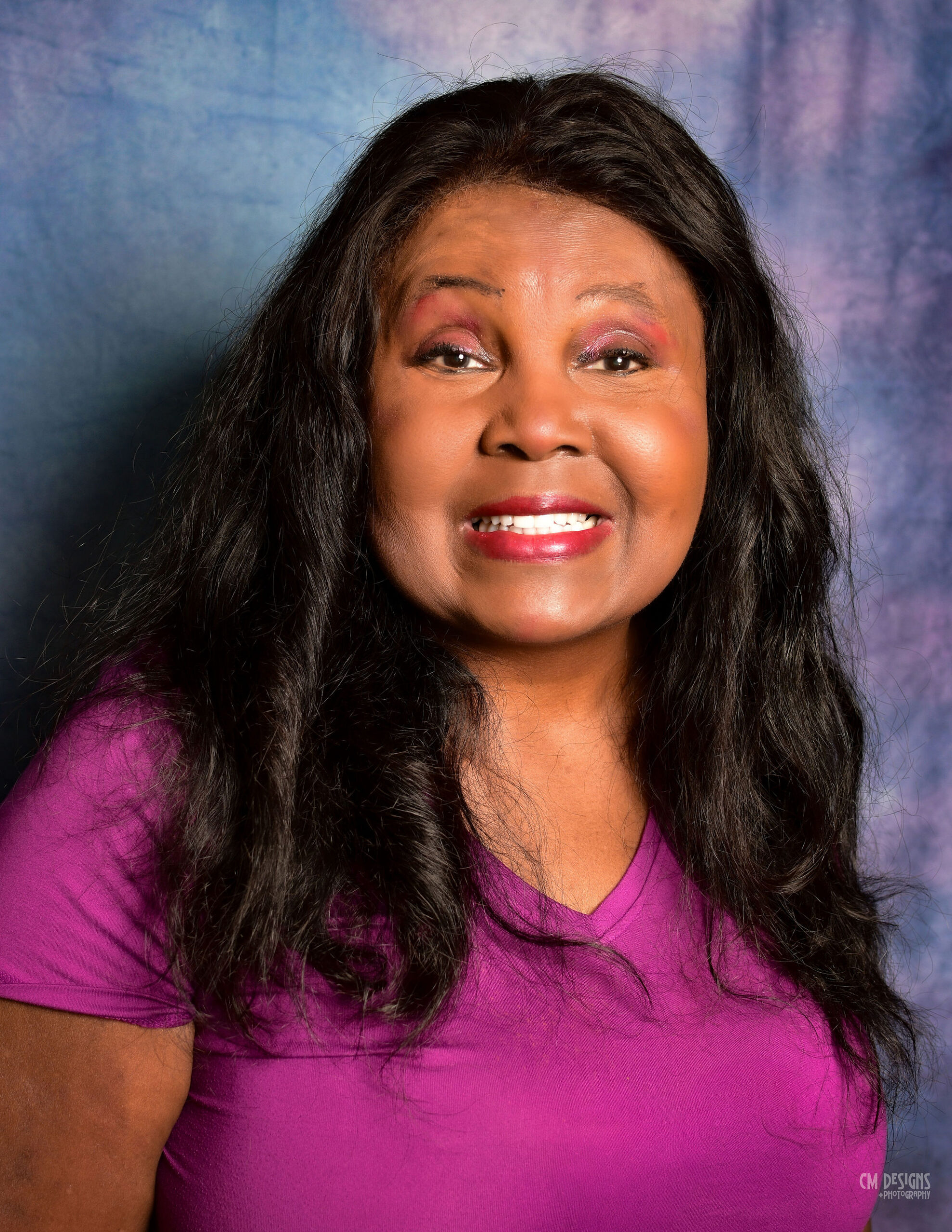
Linda Walls was domestically abused, stalked, and her four young children were murdered on December 09, 1989. Linda Walls has appeared on The Oprah Winfrey Show, ABC News with Diane Sawyer, and multiple Chicago‑area news outlets. Her legislative advocacy helped shape Illinois statutory protections for victims statewide through two landmark legislative efforts: she actively contributed to the passage of Illinois’ foundational anti-stalking laws, and directly prompted the creation of 725 ILCS 5/115‑17a—a pioneer statute protecting crime victims against post-conviction subpoena abuse. Her work spans national media, statewide recognition, community education, and three decades of public speaking on resilience, safety, and personal empowerment.
Media Kit / Press Resources / Downloadable Materials for Event Planners
Advocacy Timeline (Verified Dates)
December 12, 1991 Public testimony at the Aurora domestic‑violence hearing at the request of Illinois Attorney General Roland Burris.
February 28, 1992 Letter to U.S. Assistant Attorney General Robert S. Mueller urging federal attention to stalking and victim‑rights issues.
March 1992 Testimony in Springfield during legislative discussions on Illinois House Bill 3090 / Public Act 87‑870.
MEDIA & ADVOCACY ARCHIVE
A curated collection documenting Linda Walls’s public work, national media appearances, landmark legislative reform — including her documented influence on Illinois’ 1992 anti‑stalking law and her direct role in creating 725 ILCS 5/115‑17a — and the evolution of the Intentional Resilience Blueprint.
National Television Appearance
The Oprah Winfrey Show – Full Interview (1993) Air Date: February 5, 1993
Linda appeared as a guest on The Oprah Winfrey Show for a full interview discussing the murder of my four children and the circumstances surrounding the case. The segment included photographs of my children and a detailed account of the events that led to their deaths. Oprah’s interview provided a national platform to address the realities of parental violence and the profound gaps in protection and intervention that existed at the time.
This national appearance marked one of the earliest broadcast discussions of the case, bringing widespread public awareness to domestic violence, stalking behaviors, and the urgent need for systemic protection.
ABC News – Diane Sawyer: Domestic Violence – Faces of Fear (1996)
Coverage Type: Network Television Special
Featured in a national prime-time special hosted by Diane Sawyer, this broadcast examined the warning signs of escalating abuse and the systemic gaps in victim protection. The segment highlighted my early educational work and self-defense curriculum, bringing critical national attention to the reality of stalking and domestic pressure.
1981–1993: Humanitarian Roots & Initial Media
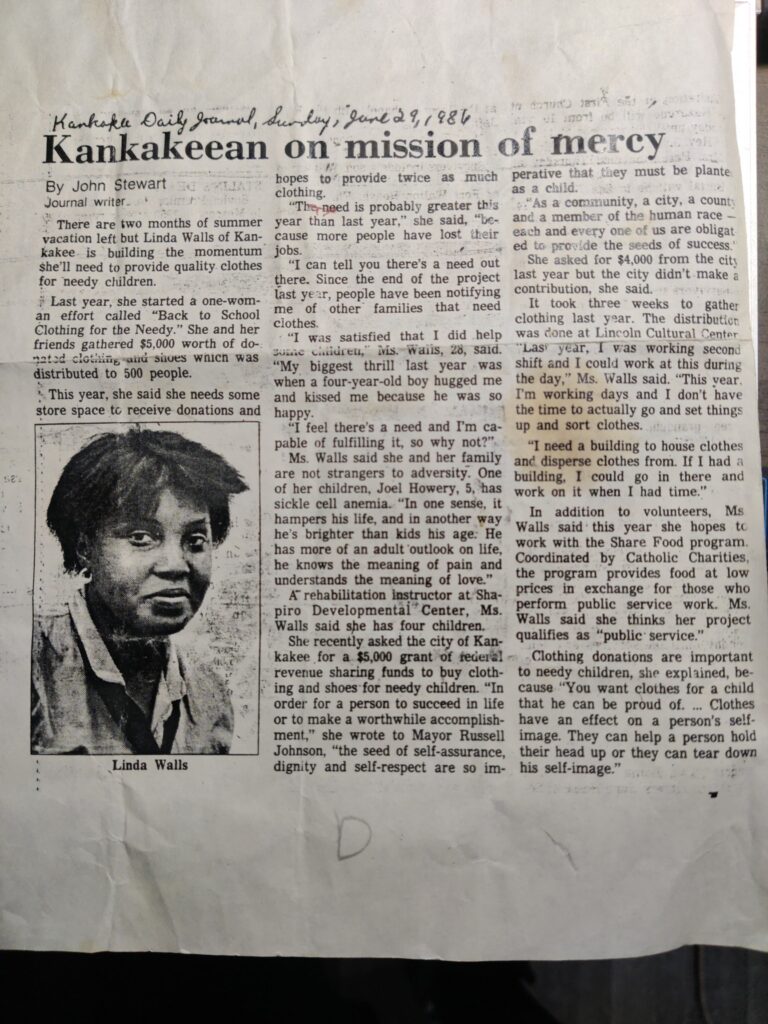
Kankakee Daily Journal — “Kankakeean on Mission of Mercy” (1986)
Coverage Type: Local Newspaper Feature / Kankakee, Illinois
This early newspaper feature highlighted Linda Walls’ humanitarian work in 1981, documenting her efforts to provide clothing and support to families in need. The article emphasized Linda’s commitment to dignity, compassion, and community service — qualities she demonstrated consistently even while privately enduring abuse. This coverage reflects the foundation of Linda’s lifelong dedication to helping others and reveals the strength of character that preceded her later public advocacy and statewide recognition.
MEDIA ARTIFACT:
Newspaper clipping (1986)
1991: TURNING POINT — EARLY ANTI‑STALKING ADVOCACY
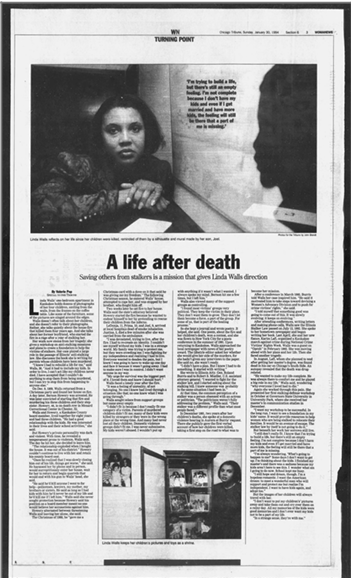
CHICAGO TRIBUNE — “A LIFE AFTER DEATH” (1991)
Coverage Type: Major Newspaper Feature / Chicago, Illinois
Publication Date: January 20, 1991 Series: Turning Point
This Chicago Tribune feature documented a pivotal moment in Linda Walls’ life and advocacy. The article, titled “A life after death,” explored Linda’s mission to help others after the murder of her four children by the criminal who abused and stalked her nearly seven years earlier.
The Tribune highlighted Linda’s early anti‑stalking advocacy, her commitment to helping others navigate threat and trauma, and the emotional impact of the murders. Linda began educating and raising awareness about stalking before formal laws or protections existed for non- high-profile people, inspiring hope in those facing similar challenges. This feature marked one of the earliest public recognitions of Linda’s advocacy work and documented the origins of her decades-long commitment to victim protection, resilience education, and public safety reform.
MEDIA ARTIFACT: Chicago Tribune newspaper page (1991)
1991: EARLY RESILIENCE & PUBLIC ADVOCACY EMERGENCE
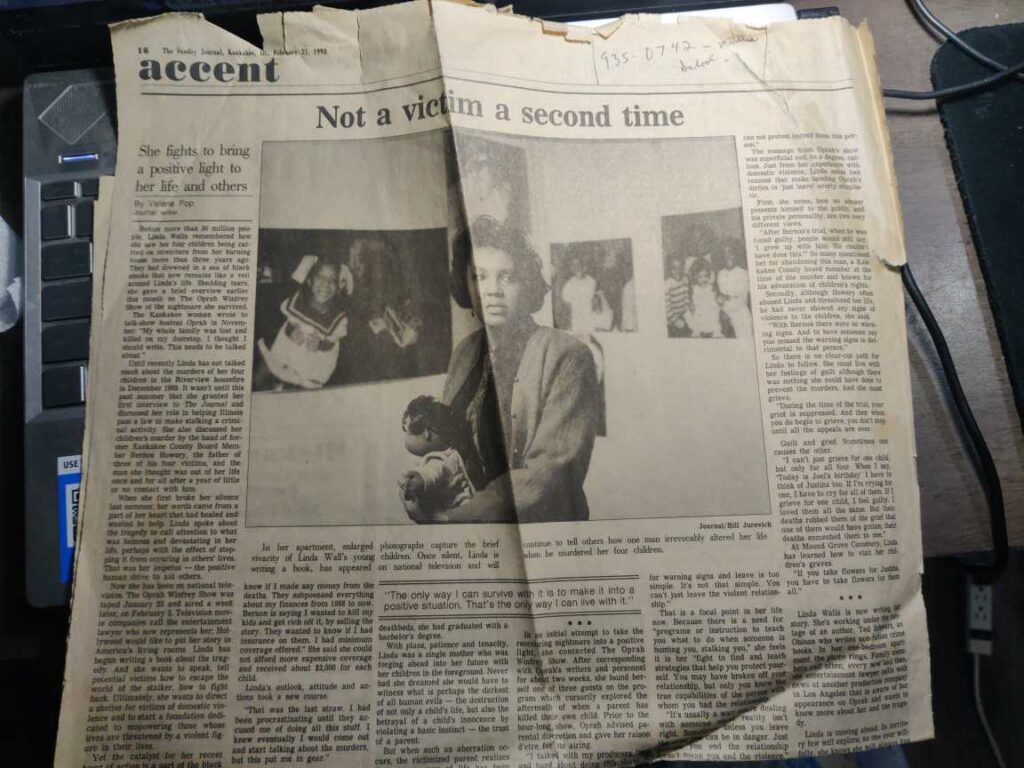
KANKAKEE DAILY JOURNAL — “NOT A VICTIM A SECOND TIME” (1991)
Coverage Type: Local Newspaper Feature / Kankakee, Illinois Publication Date: 1991
This Daily Journal feature documented Linda Walls’ determination to rebuild her life and transform personal tragedy into purposeful advocacy. The article, titled “Not a victim a second time,” explored Linda’s early efforts to bring a positive light to her life and to help others facing domestic violence, stalking, and trauma.
The coverage highlighted:
- Linda’s refusal to be defined by victimization
- Her emerging mission to support and educate others
- Her appearance on The Oprah Winfrey Show
- Her early work writing about survival and domestic violence
- Her commitment to helping victims escape abusive situations
- Her belief in transforming trauma into empowerment
Photographs accompanying the article included images of Linda with her children and family, underscoring the emotional foundation of her advocacy and the strength behind her mission.
This article represents one of the earliest public recognitions of Linda’s resilience and her transition from survivor to advocate — laying the groundwork for decades of public safety work, victim support, and statewide reform.
MEDIA ARTIFACT: Kankakee Daily Journal newspaper spread (1991)
Roland Burris & the 1992 Illinois Anti‑Stalking Law
Linda Walls’ Influence on Illinois’ Landmark Anti‑Stalking Law (1992)
In 1992, Illinois passed one of the nation’s earliest and strongest anti‑stalking laws — House Bill 3090 / Public Act 87‑870 — making stalking a felony and empowering law enforcement to intervene before physical violence occurred. Governor Jim Edgar signed the bill on July 12, 1992, with Attorney General Roland Burris as one of its most vocal champions.
During the legislative push, Attorney General Burris credited Linda Walls for her courage, relentless advocacy, and willingness to share her account following the murders of her children. Linda’s testimony—beginning at a December 1991 domestic violence hearing in Aurora at Burris’s request—exposed a critical gap in existing law: police lacked the legal authority to arrest stalkers before physical harm occurred. Her story directly inspired Burris to develop a nine‑point domestic‑violence agenda and propose the creation of a Women’s Advocacy Division within the Attorney General’s Office.
Documented Press Coverage of Burris’s Praise for Linda Walls (1992 -1994)
Multiple Illinois newspapers reported Burris’s public acknowledgment of Linda’s influence:
The Daily Journal (Kankakee, IL)
“The Law That Came Too Late”
The Sunday Journal (Kankakee, IL) July 26, 1992
* Highlights Linda Walls’s extensive letter-writing campaign to state and federal legal officials, her testimony at the December 1991 Aurora hearing, and Attorney General Roland Burris citing her case as his primary motivation to push for his Women’s Advocacy Division and victim rights agenda.
“A Life After Death Saving Others From Stalkers Keeps Linda Walls Going”
Chicago Tribune | January 30, 1994
* Profile on Linda’s advocacy work, documenting her public account at Burris’ request in Aurora, her push to redefine stalking beyond celebrities to protect everyday citizens, and the ultimate passage of the Illinois Stalking Law on July 12, 1992.
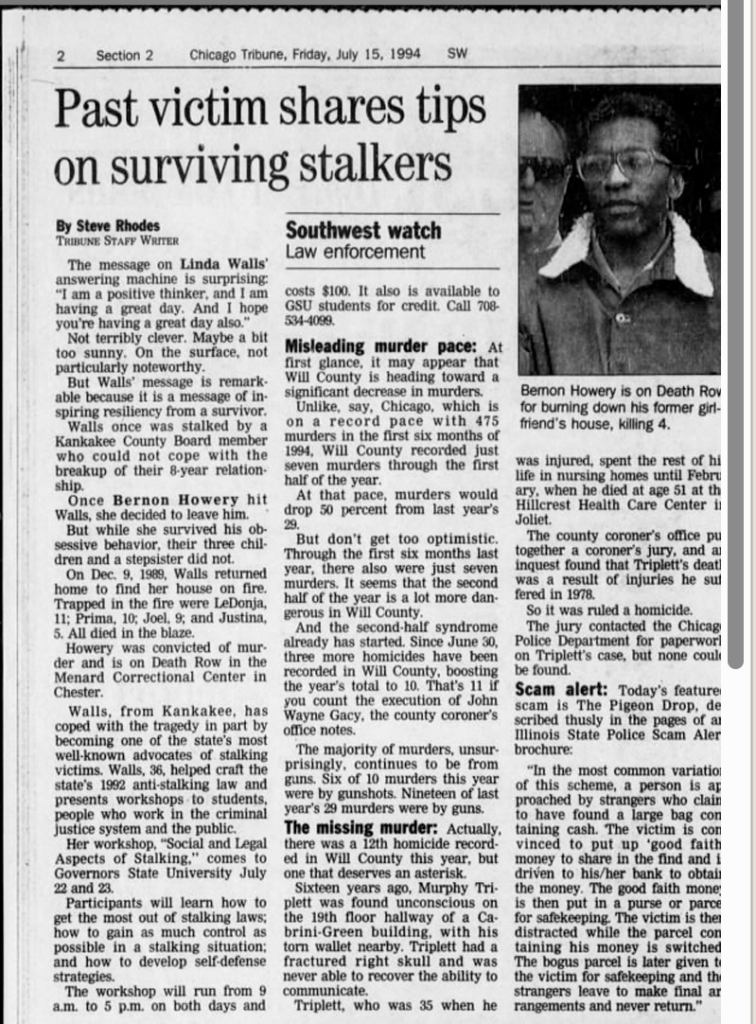
“Past Victim Shares Tips on Surviving Stalkers”
Chicago Tribune | July 15, 1994
* Covers Linda’s ongoing educational efforts, including her holistic protection workshops designed to help stalking victims create personalized action plans, emergency strategies, and survival frameworks to navigate escalating threat situations and improve safety outcomes.
1993–1994: Stalking Education & Statewide Recognition
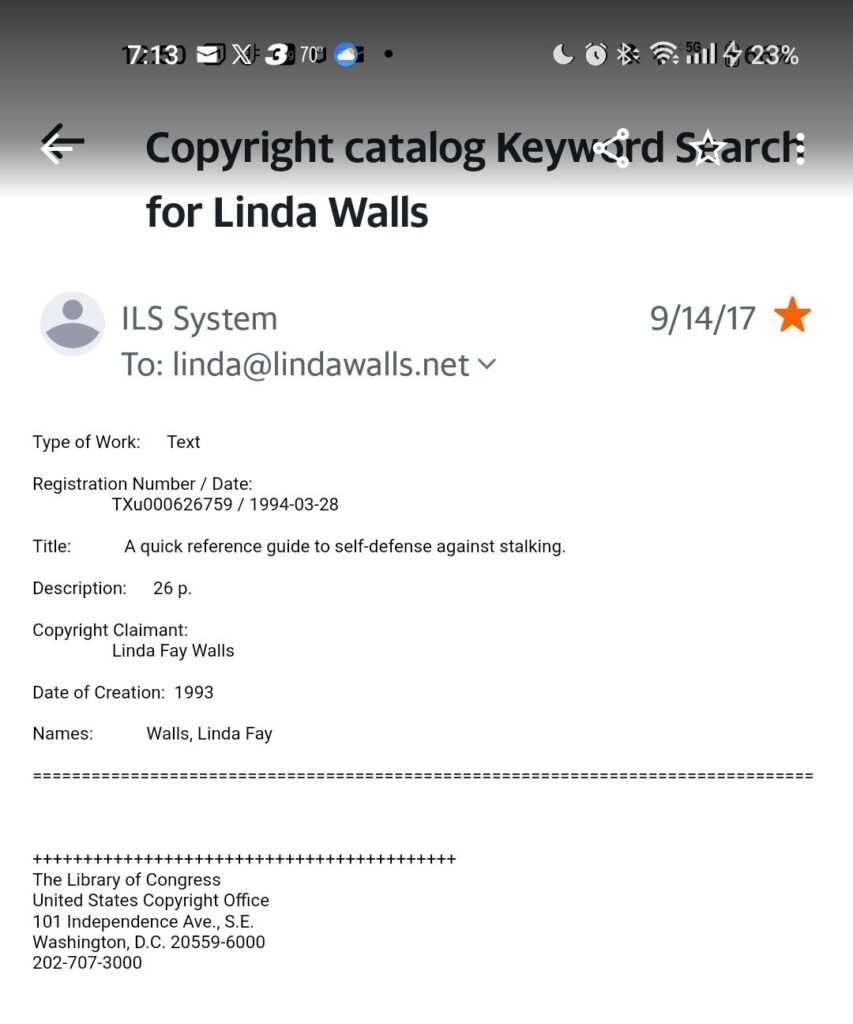
Published Work: Self-Defense Against Stalking (1993)
* Published Work: A Quick Reference Guide to Self-Defense Against Stalking
Created: 1993 | Copyright Registered: March 28, 1994 (TXu000626759)
Originally developed as a master’s project in Communication Studies at Governors State University, this 26-page guide established the core academic curriculum for early stalking-education workshops taught at Governors State University, Bradley University, and the National Victims Center in Washington, D.C.
* Pioneering Safety & Escape Frameworks (1993)
A Quick Reference Guide to Self-Defense Against Stalking included early, structured escape and safety planning models designed for individuals facing escalating domestic threat and stalking. Created during an era when formal statutory protections and standardized victim safety protocols were virtually non-existent, Linda’s copyrighted framework helped establish foundational principles for practical safety planning, threat assessment, and crisis mitigation that predated and influenced broader institutional victim-advocacy standards.
MEDIA ARTIFACTS: 1993 Copyright A Quick Reference Guide to Self-Defense Against Stalking
1994: EARLY WORKSHOP LEADERSHIP & HOLISTIC STALKING‑SURVIVAL EDUCATION
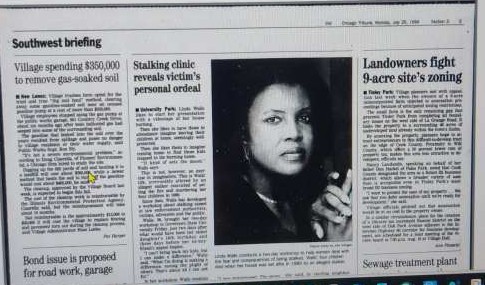
CHICAGO TRIBUNE — VICTIM RECOVERY & SAFETY WORKSHOPS (1994)
Coverage Type: Major Newspaper Feature / Chicago, Illinois
Publication Date: July 25, 1994
This Chicago Tribune feature documented Linda Walls’ early work conducting holistic recovery and safety‑planning workshops for victims of violent crime. The article highlighted Linda’s leadership in teaching individuals how to overcome fear, regain control, and begin healing after trauma — while also equipping them with practical, personalized strategies to survive stalking incidents.
The Tribune emphasized Linda’s emerging role as a trauma‑recovery and safety‑planning educator, noting her work in:
- University Park, where she led structured, curriculum‑based workshops
- Helping victims understand emotional and physiological responses to trauma
- Teaching action‑based safety strategies, including emergency planning and threat‑response steps
- Providing early resilience‑based and holistic education long before these approaches were widely adopted
- Supporting victims in navigating both the emotional aftermath and the real‑time dangers associated with stalking
This coverage marked a significant moment in Linda’s public advocacy history, documenting her transition from survivor to educator and her pioneering contributions to holistic, trauma‑informed, and safety‑focused victim support.tions to trauma‑informed victim support.
MEDIA ARTIFACT: Chicago Tribune newspaper page (1994)
1993–1994: NATIONAL NEWS COVERAGE — ABC, NBC, CBS
Coverage Type: National Television News
Locations: Chicago, IL | National Syndication
Following the murders of her children and the emerging national conversation around domestic violence and stalking, Linda’s story was covered by multiple national news networks. These segments documented the case, the failures in systemic protection, and the growing urgency for legislative reform.
Coverage included:
- ABC News — National segment on parental violence and early stalking behaviors
- NBC News — Coverage of the case and community response
- CBS News — Reporting on the legal proceedings and public safety concerns
These broadcasts helped elevate Linda’s advocacy into national awareness and contributed to early discussions around victim protection laws.
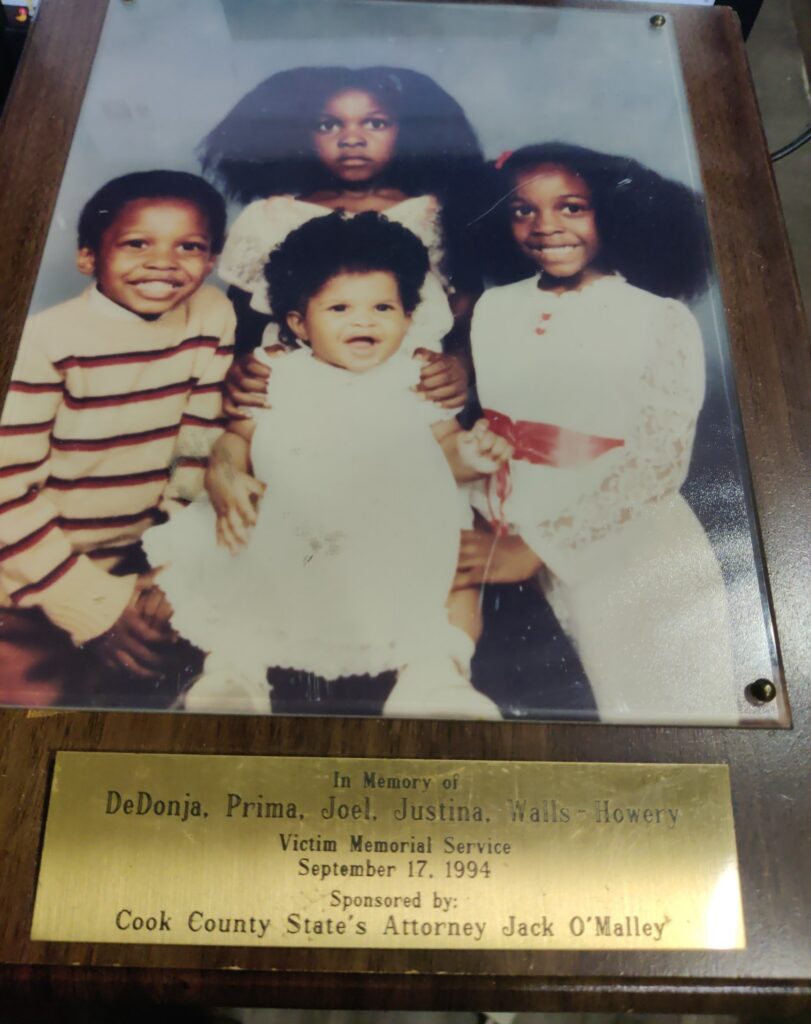
* Illinois Homicide Victims Memorial Service Keynote (1994)
Coverage Type: Statewide Memorial Event / Survivor Advocacy
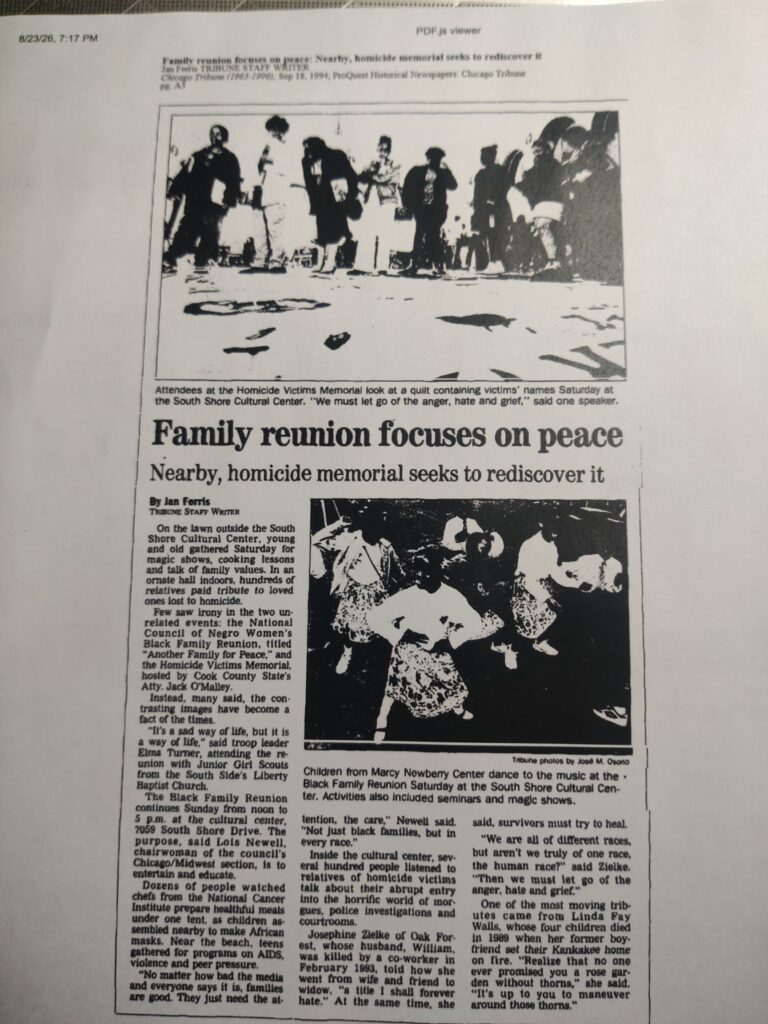
In 1994, Linda spoke at the Illinois Homicide Victims Memorial Service, addressing resilience, grief, and trauma recovery. During the ceremony, she shared a line closely associated with her early advocacy: “Realize that no one ever promised you a rose garden without thorns.
MEDIA ARTIFACTS: Memorial plaque honoring LeDonja, Prima, Joel, and Justina Walls-Howery | Chicago Tribune feature (1994)
MEDIA ARTIFACTS: Chicago Tribune — “Family reunion focuses on peace — Nearby, homicide memorial seeks to rediscover it.” (1994) Newspaper coverage documenting the memorial event and community reflection
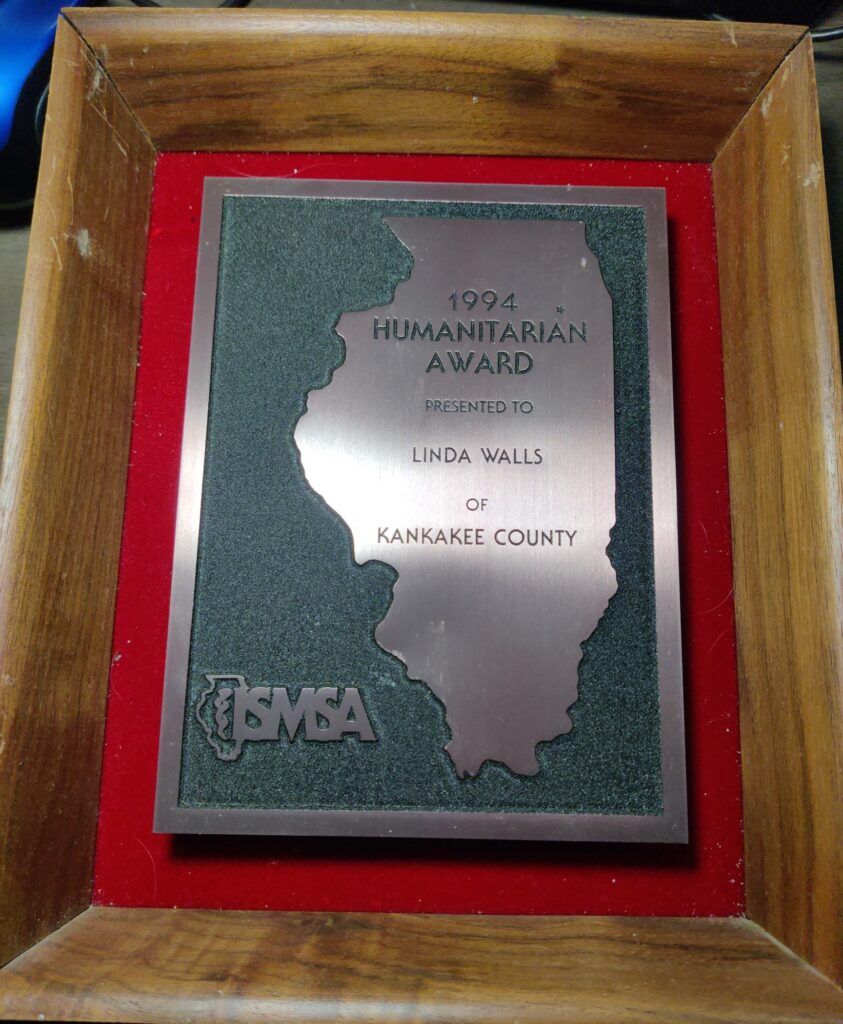
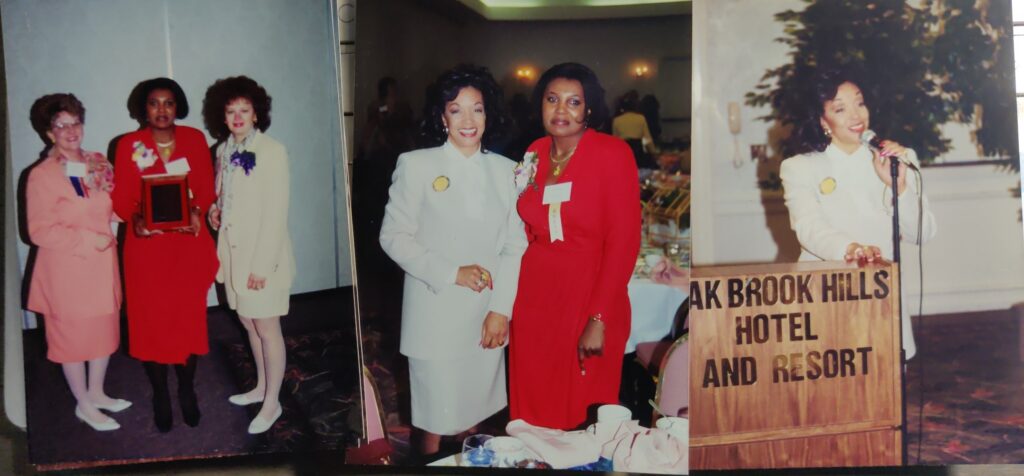
Illinois State Medical Society Auxiliary — Humanitarian Award (1994)
Coverage Type: Statewide Professional Recognition | Oak Brook Hills, Illinois
Linda received the Humanitarian Award for pioneering public education around stalking, victim safety, and crisis recovery. Broadcast icon Meri Dee of WGN Channel 9 served as keynote speaker and mentor, introducing Linda to her speaker agent, Beryl Zitt of The Contemporary Forum (who also represented Illinois Poet Laureate Gwendolyn Brooks).
MEDIA ARTIFACTS: Official award plaque | Ceremony photographs with Meri Dee and ISMS leadership
1994: The Anti-Stalking Reform Advocacy
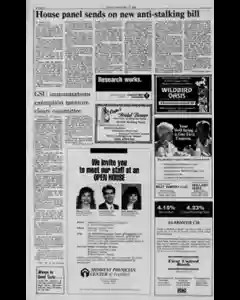
House Panel Sends on New Anti-Stalking Bill — The Star (April 17, 1994)
Coverage Type: Legislative Press Feature / Public Policy Impact
In early 1994, Linda publicly exposed a loophole in Illinois law allowing defense attorneys to issue intrusive subpoenas directly to crime victims without judicial oversight. The Star reported on her testimony before the Illinois House Criminal Judiciary Committee, where she described subpoena misuse during appeals in People v. Howery. The committee unanimously advanced anti-stalking legislation (16–0).
MEDIA ARTIFACT: Newspaper clipping from The Star (April 17, 1994)
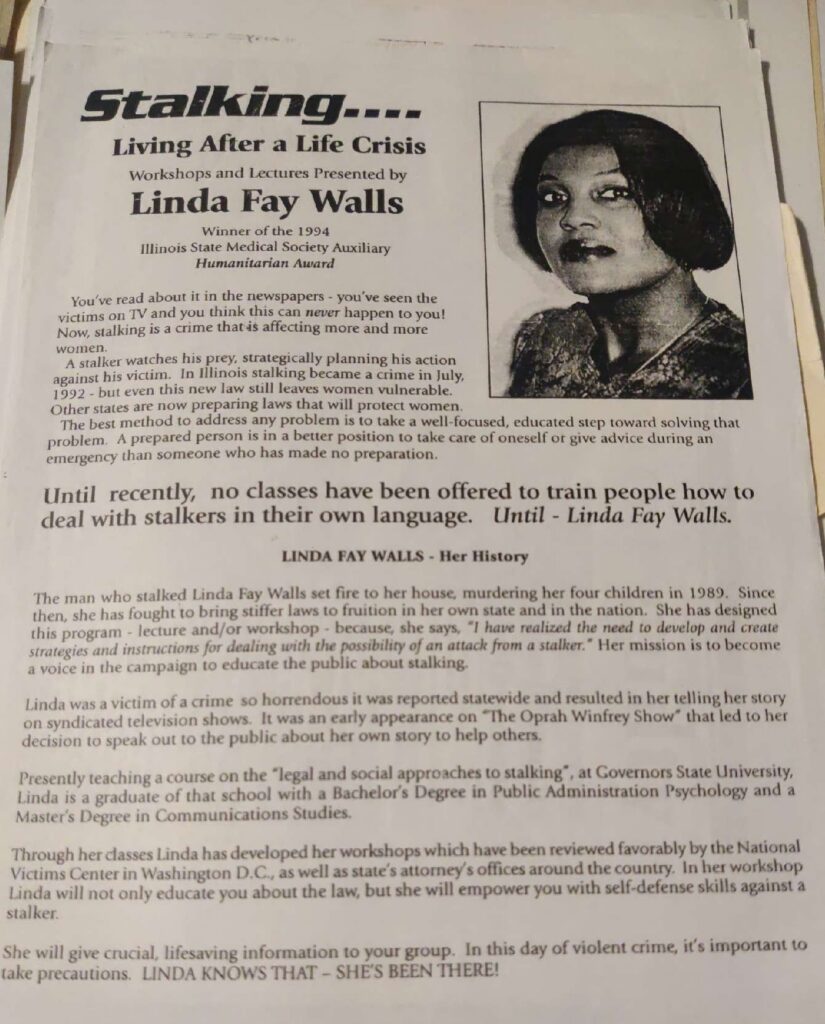
Self-Defense Against Stalking: Early Education & Workshop Development (1993–1996)
During a period when stalking was not yet formally addressed within criminal statutes, Linda developed and delivered foundational coursework on situational awareness, threat assessment, and safety planning across university classrooms and victim-service organizations.
1995: VICTIMS’ RIGHTS ADVOCACY & COMMUNITY MOBILIZATION
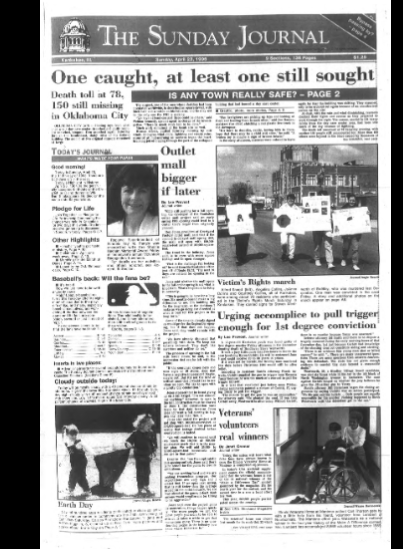
DAILY JOURNAL — “70 MARCH FOR VICTIMS’ RIGHTS” (1995)
Coverage Type: Local Newspaper Feature / Kankakee, Illinois
Publication Date: April 23, 1995
This Daily Journal feature documented a public march for victims’ rights held in 1995, during a period of growing statewide and national attention to victim protection, domestic violence awareness, and legislative reform. The article highlighted community members, advocates, and survivors who gathered to raise awareness and demand stronger protections for victims of violent crime.
The coverage emphasized:
- The significance of the march in the broader victims’ rights movement
- Community solidarity and public participation
- Advocacy efforts aimed at strengthening legal protections
- The emotional and civic importance of the event
- The growing momentum for statewide legislative change
Photographs accompanying the article captured march participants, signs, and public demonstrations, illustrating the collective commitment to victim advocacy during this era.
This event reflects the broader social climate in which Linda’s advocacy and legislative involvement were taking shape, contributing to the statewide push for stronger victim‑protection laws.
MEDIA ARTIFACT: Daily Journal newspaper page (1995)
1995: COMMUNITY SUPPORT & VICTIM ADVOCACY DEVELOPMENT
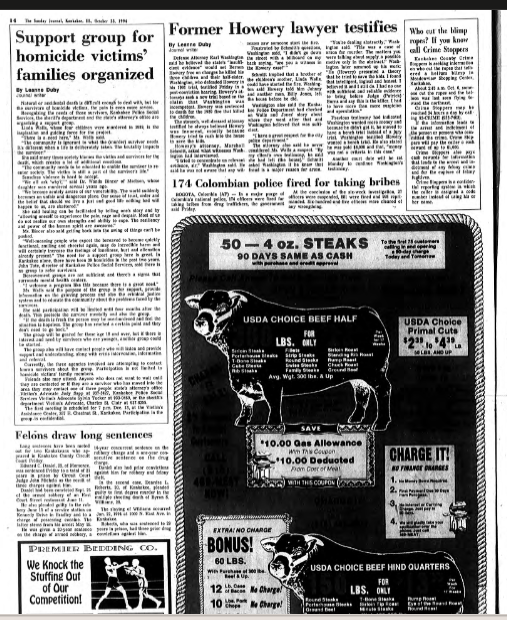
DAILY JOURNAL — “SUPPORT GROUP FOR HOMICIDE VICTIMS’ FAMILIES ORGANIZED” (1995)
Coverage Type: Local Newspaper Feature / Kankakee, Illinois
Publication Date: April 23, 1995
This Daily Journal article documented the formation of a support group for families affected by homicide — a critical development in community‑based victim advocacy during the mid‑1990s. The coverage highlighted the need for structured emotional support, shared healing spaces, and community resources for families navigating the aftermath of violent crime.
The article emphasized:
- The emotional and psychological needs of families impacted by homicide
- The importance of community‑based support networks
- The emergence of organized advocacy efforts in Kankakee
- The broader statewide movement toward victim‑centered services
- The role of survivors and advocates in shaping public awareness
This coverage reflects the environment in which Linda’s advocacy was expanding — a period marked by increasing public recognition of victims’ rights, community mobilization, and the development of trauma‑informed support structures.
MEDIA ARTIFACT: Daily Journal newspaper page (1995)
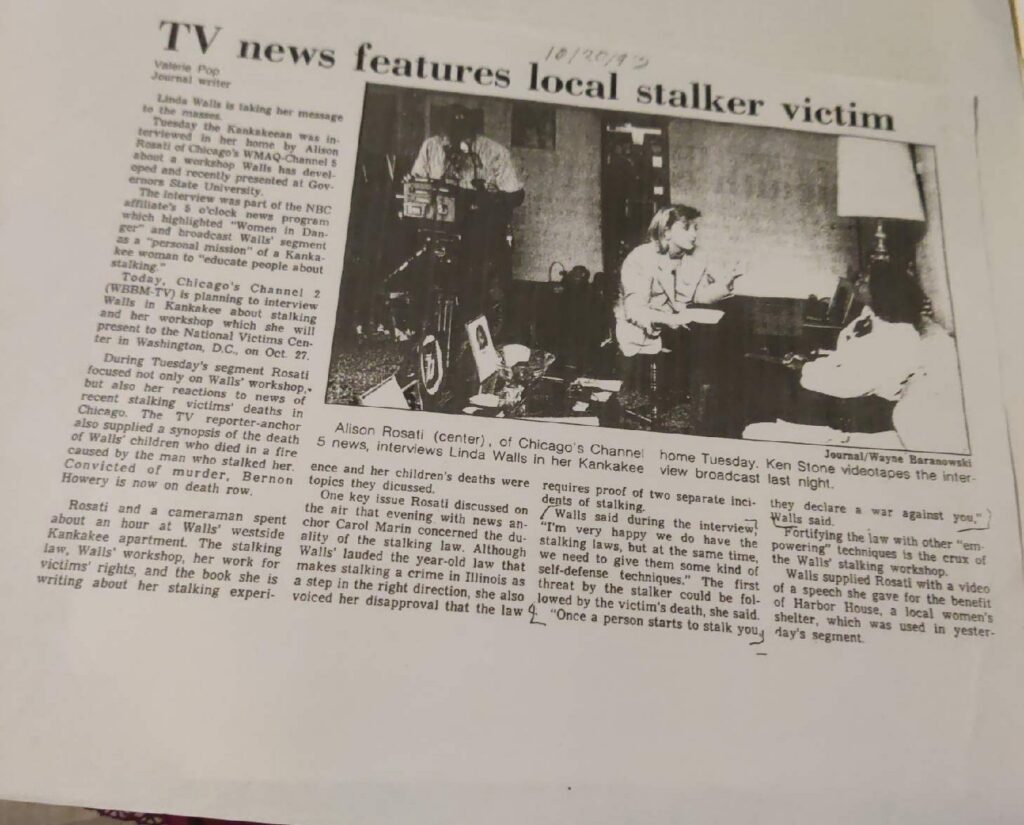
Chicago TV News Feature — WMAQ Channel 5 (1993)
Interview by: Alison Rosati
Location: Kankakee, Illinois
Coverage Type: Television News Segment
In October 1993, Chicago’s WMAQ Channel 5 featured Linda Walls in a televised news segment highlighting her early advocacy for victims of stalking. Reporter Alison Rosati conducted an in‑home interview focused on Linda’s efforts to educate the public, strengthen awareness of stalking behaviors, and support victims navigating the legal system. The segment aired during the evening news and contributed to statewide visibility of Linda’s work at a time when anti‑stalking laws were newly emerging in Illinois.
Media Artifact:
A newspaper clipping documenting the interview, including a photograph of Rosati and videographer Ken Stone filming in Linda’s home.
WBBM‑TV Channel 2 — Planned Interview for National Victims Center (1993)
Coverage Type: Television News Feature (Planned Segment)
Location: Chicago, Illinois
Chicago’s WBBM‑TV Channel 2 scheduled an interview with Linda Walls for a segment intended for presentation at the National Victims Center in Washington, D.C. This planned coverage was documented in contemporaneous reporting, specifically within the Channel 5 news article that covered Linda’s early advocacy work. The reference highlights growing statewide and national interest in Linda’s efforts to educate the public about stalking during the early years of anti‑stalking legislation.
MEDIA ARTIFACT:
Referenced within the Channel 5 newspaper article documenting the televised interview.
House Panel Sends on New Anti-Stalking Bill — The Star (April 17, 1994)
Coverage Type: Legislative Press Feature / Public Policy Impact
In early 1994, Linda publicly exposed a loophole in Illinois law allowing defense attorneys to issue intrusive subpoenas directly to crime victims without judicial oversight. The Star reported on her testimony before the Illinois House Criminal Judiciary Committee, where she described subpoena misuse during appeals in People v. Howery. The committee unanimously advanced anti-stalking legislation (16–0).
MEDIA ARTIFACT: Newspaper clipping
NCADV Voice Magazine — “Stalked.” (Winter 1994)
Coverage Type: National Advocacy Publication
Location: Washington, D.C.
Publisher: National Coalition Against Domestic Violence (NCADV)
In the Winter 1994 issue of NCADV Voice Magazine, Linda Walls was featured in a national advocacy article titled “Stalked.” The publication highlighted Linda’s early public education work during the formative years of anti‑stalking legislation in the United States. The article documented her efforts to raise awareness about stalking behaviors, support victims navigating the legal system, and encourage national dialogue about survivor safety.
NCADV’s coverage placed Linda’s voice within a broader national movement, recognizing her as one of the early survivor‑educators speaking publicly about stalking at a time when few resources existed and public understanding was limited. The article remains one of the earliest national publications acknowledging Linda’s advocacy.
MEDIA ARTIFACT:
Scan of NCADV Voice Magazine — Winter 1994 issue (to be added when located).
1994: WBBM NEWSRADIO 780 — CITIZEN OF THE WEEK
Coverage Type: Statewide Radio Feature Location: Chicago, Illinois
Linda was recognized by WBBM Newsradio 780 as “Citizen of the Week” for her advocacy, public safety work, and contributions to statewide victim protection. The segment highlighted her resilience, leadership, and commitment to legislative reform.
MEDIA ARTIFACT: Radio segment summary (placeholder)
1994–1996: Post-Conviction Subpoena Reform (HB 3373 / 725 ILCS 5/115-17a)
Subpoena Harassment During Post-Conviction Proceedings (1994–1996)
Coverage Type: Victim Rights Documentation / Legislative Catalyst
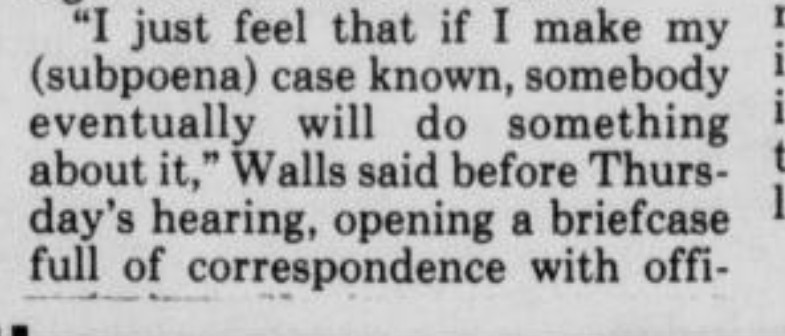
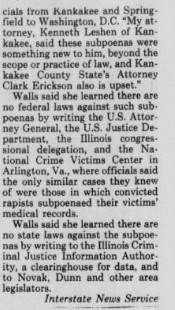
During post-conviction appeals in People v. Howery, Linda endured a sustained pattern of invasive subpoenas seeking personal records. After confirming with state and federal authorities that no statutory protections existed for victims in post-conviction proceedings, she documented the abuse and brought the issue to state legislators.
MEDIA ARTIFACTS: Interstate News Service clippings documenting subpoena harassment
1991–1993: Educational & Survival Frameworks
Illinois General Assembly — House Bill 3373 (1995–1996)
Coverage Type: Statutory Impact / Landmark Legislation
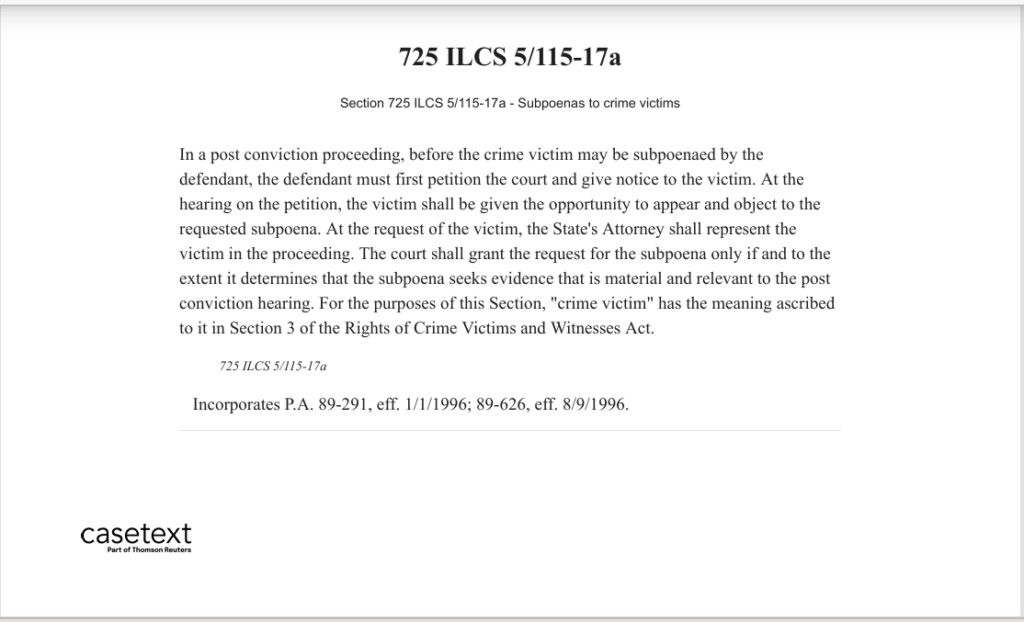
Linda initiated and advanced HB 3373 to close the post-conviction subpoena loophole. After contacting lawmakers across Illinois and testifying before the House Criminal Judiciary Committee, State Rep. Phil Novak sponsored the bill. It passed both chambers, was signed into law by Governor Jim Edgar, and took effect on January 1, 1996 as 725 ILCS 5/115-17a.
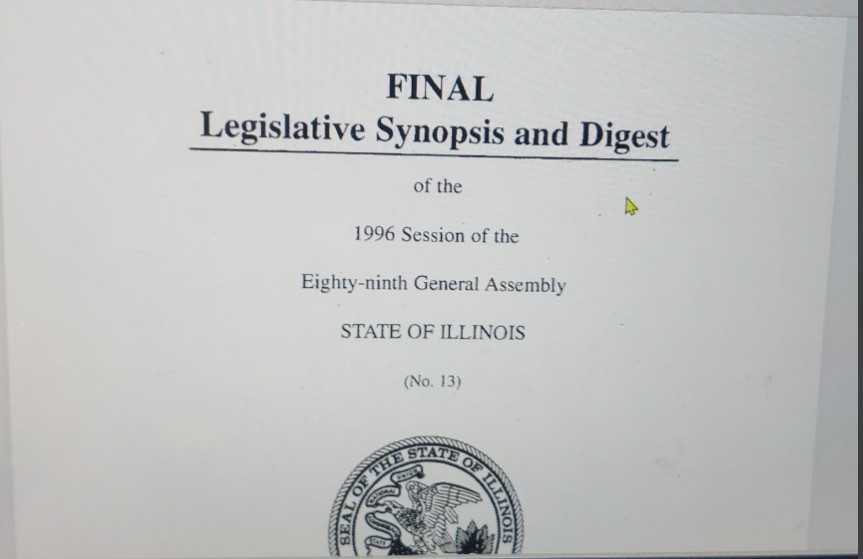
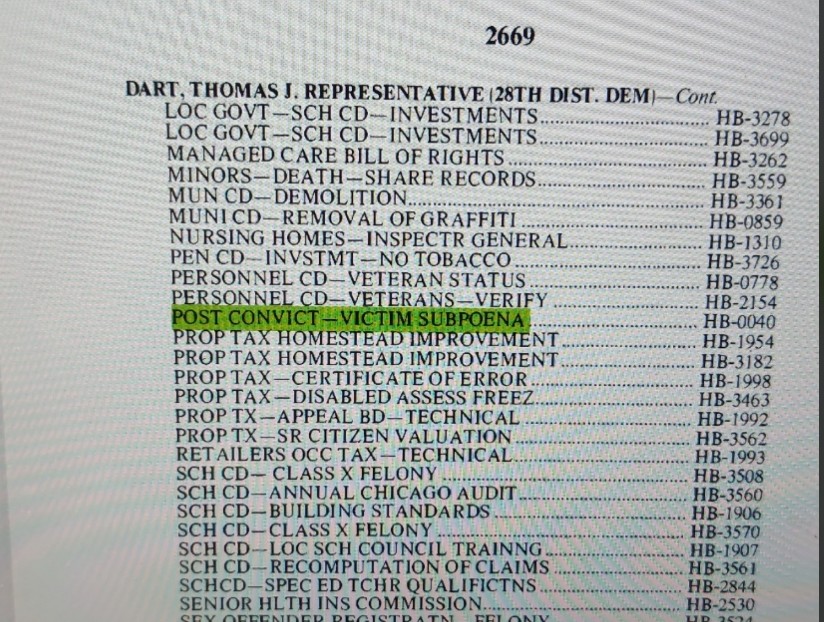
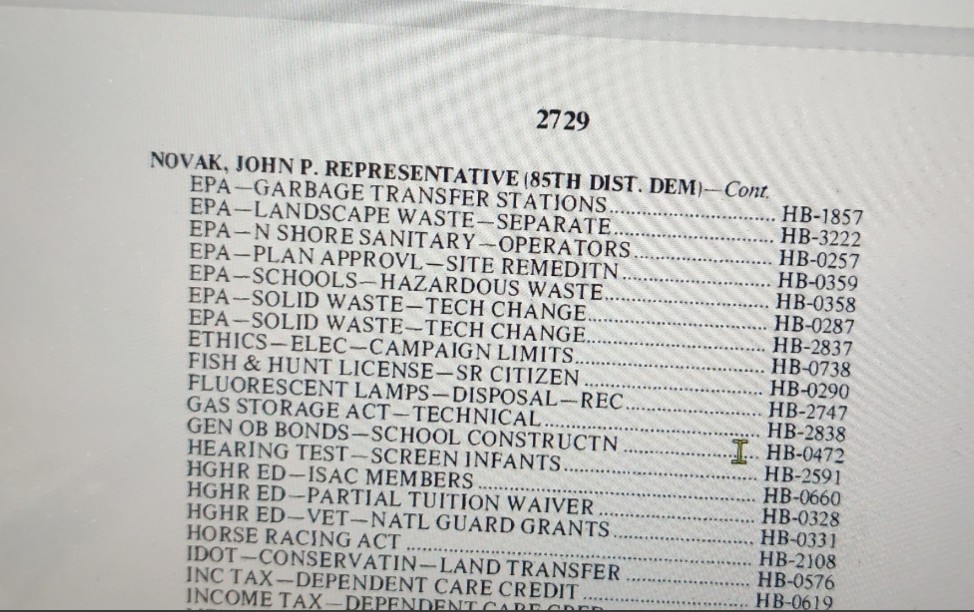
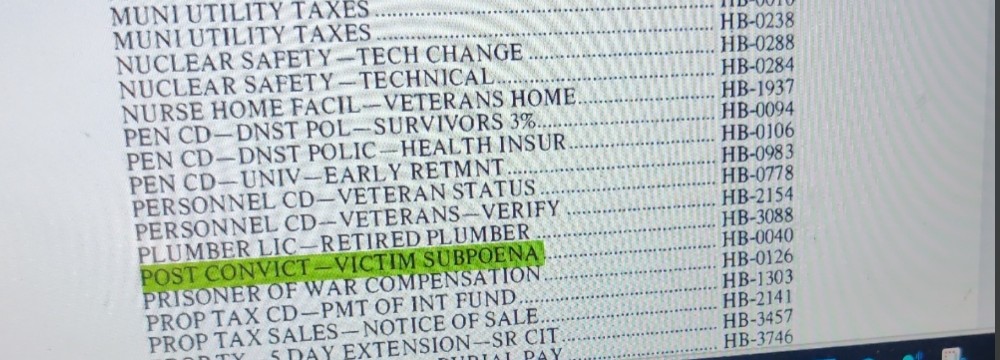
Legislative Digest Entries — 89th General Assembly (1996)
Coverage Type: Official Statutory Record
The official legislative digest records the passage of the bill (renumbered HB 0040) sponsored by Rep. Thomas Dart and Rep. Phil Novak, codifying judicial review protections for crime victims.
MEDIA ARTIFACT: Legislative Digest pages 2669 and 2729
1995–1996: local, State Legislative Recognition & National Advocacy
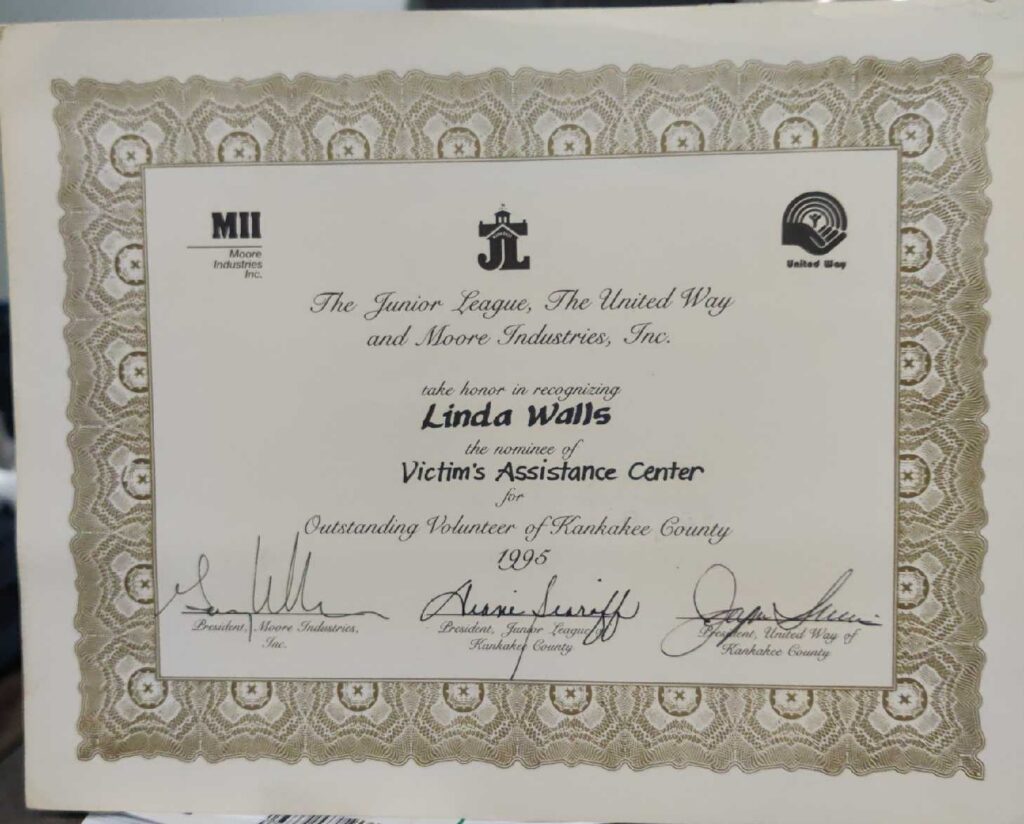
Outstanding Volunteer of Kankakee County — 1995
Linda Walls was honored as the Outstanding Volunteer of Kankakee County in 1996, recognized jointly by Moore Industries Inc., The Junior League of Kankakee County, and United Way of Kankakee County. Nominated by the Victim’s Assistance Center, this award acknowledged Linda’s commitment to supporting survivors of violence and her leadership within the community.
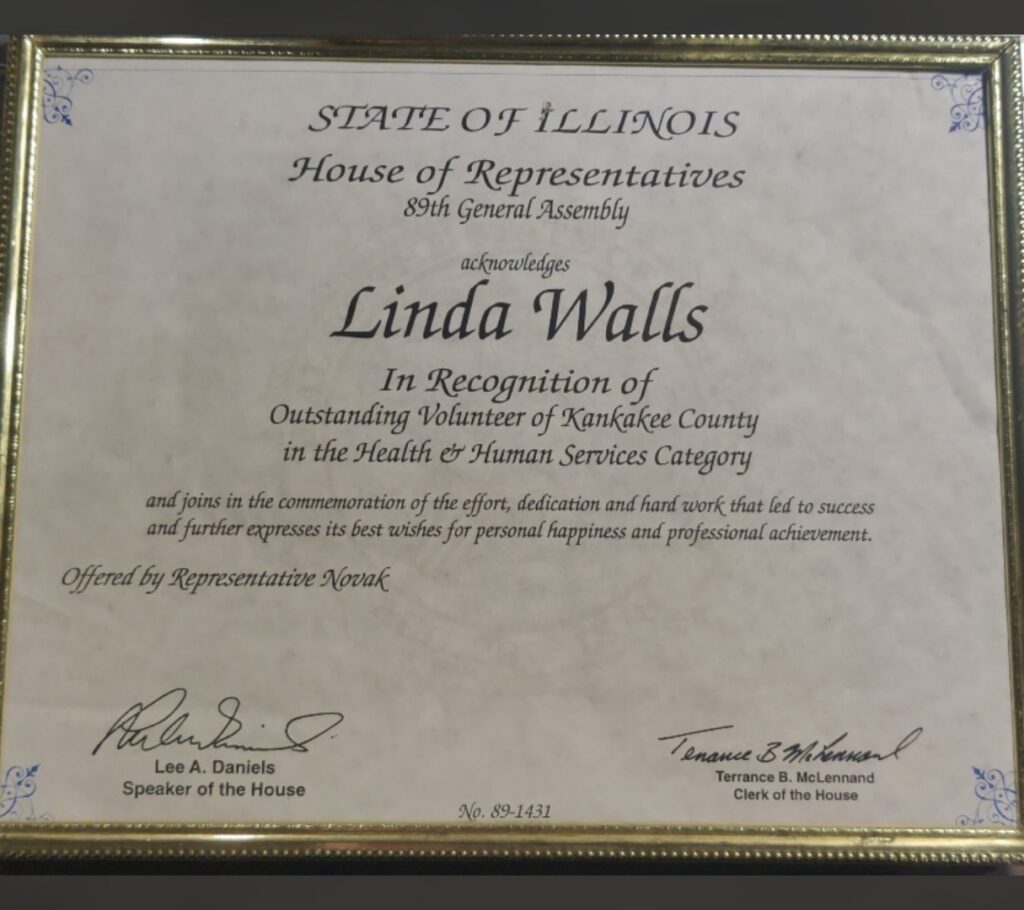
State of Illinois House of Representatives Official Recognition
89th General Assembly | Certificate No. 89-1431
Offered by Representative Novak | Signed by Lee A. Daniels, Speaker of the House
* Honor: Official legislative certificate recognizing Linda Walls as Outstanding Volunteer of Kankakee County in the Health & Human Services Category.
* Significance: Commemorates dedicated advocacy work on behalf of crime victims, public safety, and statutory protections across Illinois.
2002–Present: Historical Record & The Intentional Resilience Blueprint
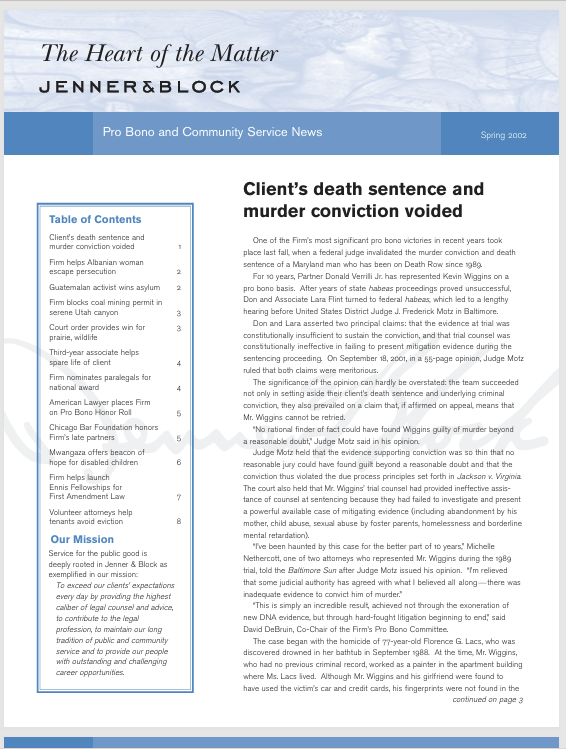
Jenner & Block — Post-Conviction Representation Contextual Entry (2002)
Coverage Type: Legal Landscape Context
Included as an archival entry illustrating the legal environment of post-conviction appeals prior to widespread victim-protection reforms.
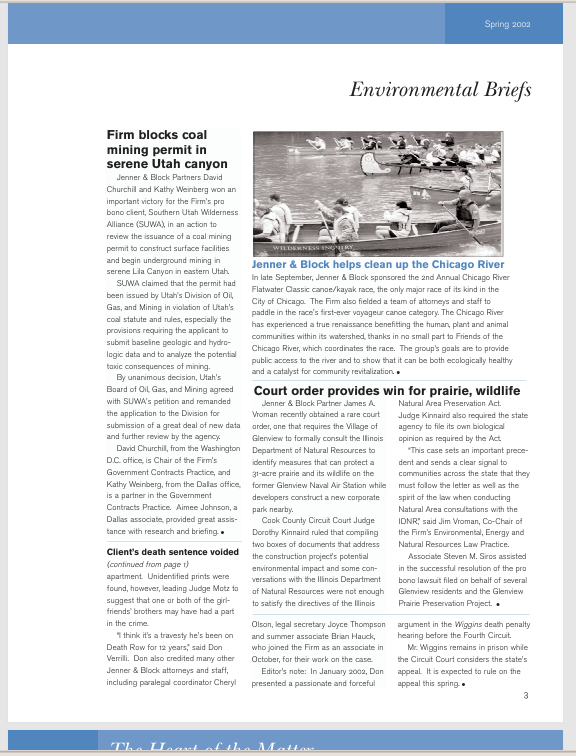
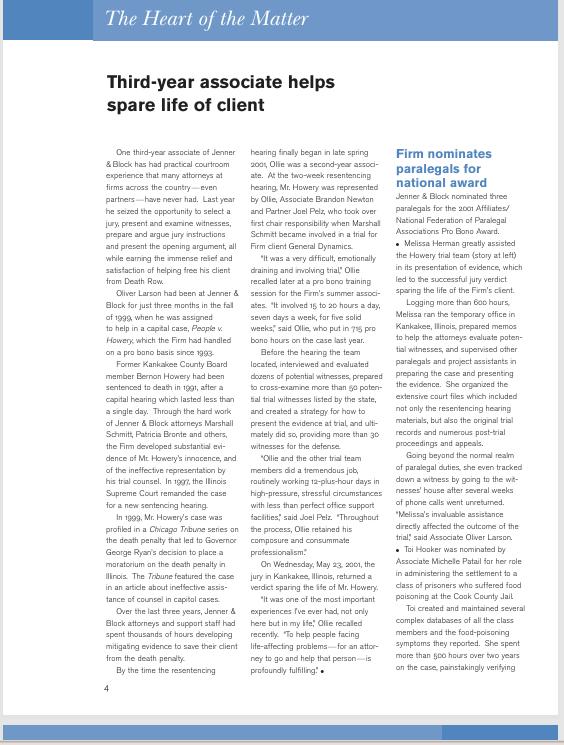
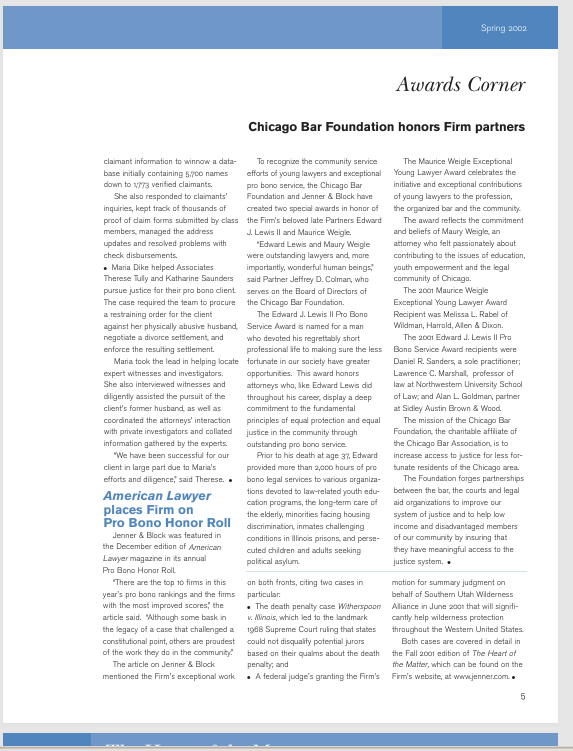
Chicago Sun‑Times – “LINDA WALLS: A VOICE AGAINST VIOLENCE” (2013)
Location: Chicago, Illinois
This February 14, 2013 commentary piece was written by Linda Walls for the Chicago Sun‑Times. Published on Valentine’s Day, the op‑ed focused on domestic violence prevention, honoring the memory of victims of violence, and advocating for stronger community support and legal protections for survivors of stalking and abuse.
The payment for this article was donated to Harbor House, formally known as the Kankakee County Coalition Against Domestic Violence (operating as Harbor House). Its expanded primary facility in Kankakee is named the Harbor House Lorena Panozzo Center for Domestic Violence Services and Prevention.
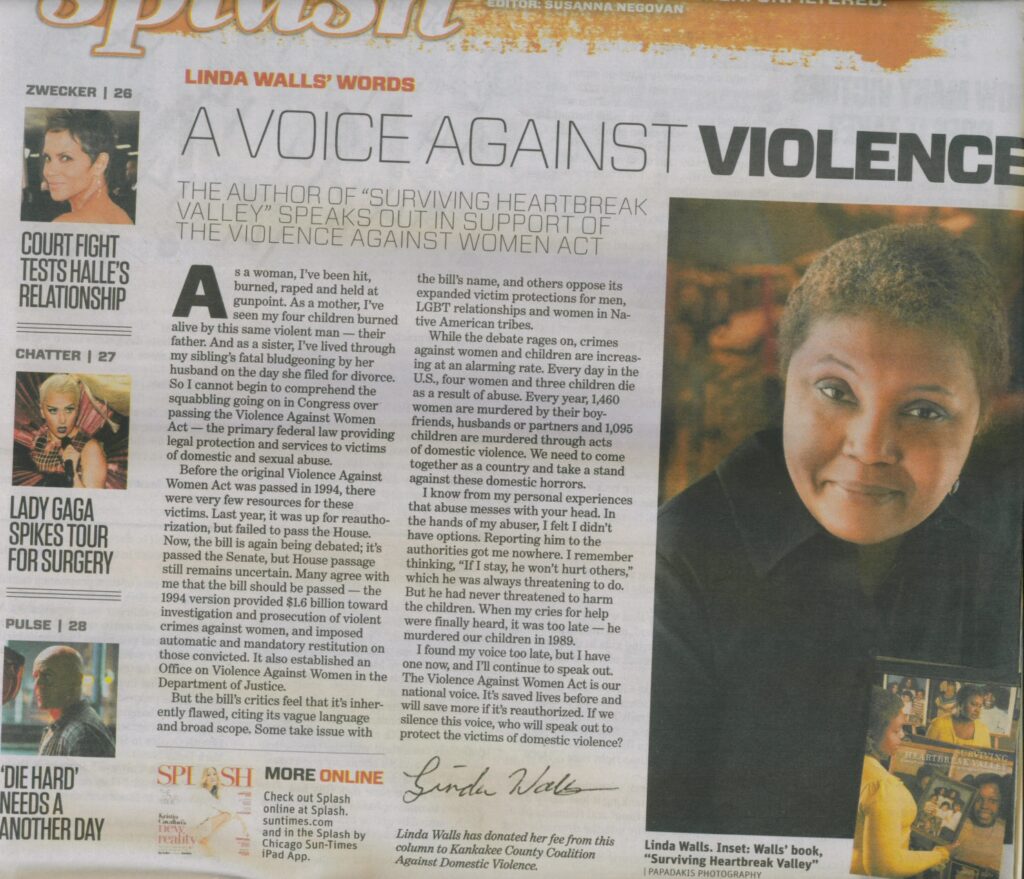
Chicago Sun‑Times – “A Voice Against Violence” (2013) Published commentary by Linda Walls
Audience Reflections on Linda’s Advocacy
February 14, 2013
“I just read your SunTimes article on the Violence Against Women Act. Thank you for keeping this issue alive. My mother was abused for 74 years until she passed last April. Although her death certificate says metastatic breast cancer, I know firsthand that decades of mental, emotional, physical, and spiritual abuse truly killed her.
I was with her at her side, and I will never forget what I witnessed my entire life. Thank you for writing. I am so sorry for what you went through. Thank you for being an inspiration and support to others who still have a chance.” — L.A.
February 14, 2013
“I read your story in today’s paper. My heart aches for you. I am a survivor of domestic violence and have been battered in the courts for three years post‑divorce. This is yet another subject that must be addressed before more women endure what I have. Thank you for your courage.” — C.M.
2014: STATEWIDE RECOGNITION — CHICAGO TRIBUNE FEATURE
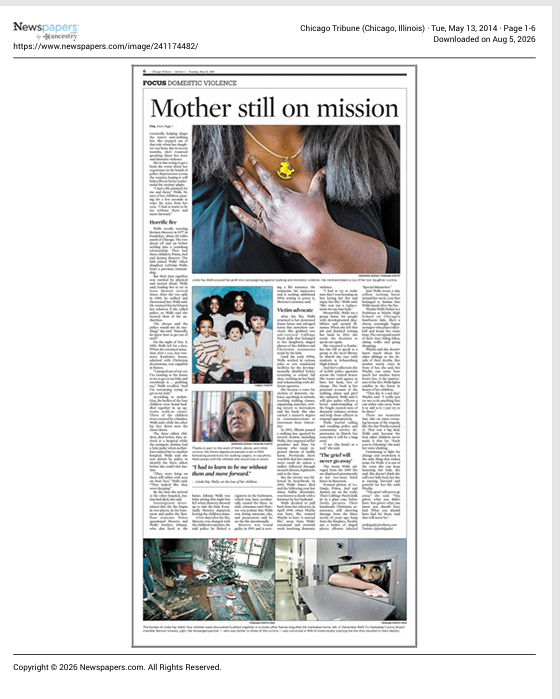
CHICAGO TRIBUNE — “MOTHER STILL ON MISSION” (2014)
Coverage Type: Statewide Newspaper Feature /
Chicago, Illinois Publication Date: May 13, 2014
This statewide feature in the Chicago Tribune documented Linda Walls’ continued advocacy decades after the murders of her four children. The article highlighted her unwavering commitment to domestic‑violence awareness, public safety, and survivor‑centered education.
The Tribune’s coverage emphasized:
- Linda’s long‑standing mission to support victims of domestic violence
- Her resilience and leadership in public safety advocacy
- The emotional and historical impact of her story
- Her ongoing work to educate communities and influence policy
The article included multiple photographs, including:
- A portrait emphasizing Linda’s resilience
- Archival family images
- Images of Linda speaking publicly
- Photographs documenting the crime scene and aftermath
This feature reinforced Linda’s role as a statewide leader in domestic‑violence advocacy and highlighted her continued mission to protect and empower survivors.
MEDIA ARTIFACT: Chicago Tribune newspaper page (2014)
Speaking Engagements & Public Events
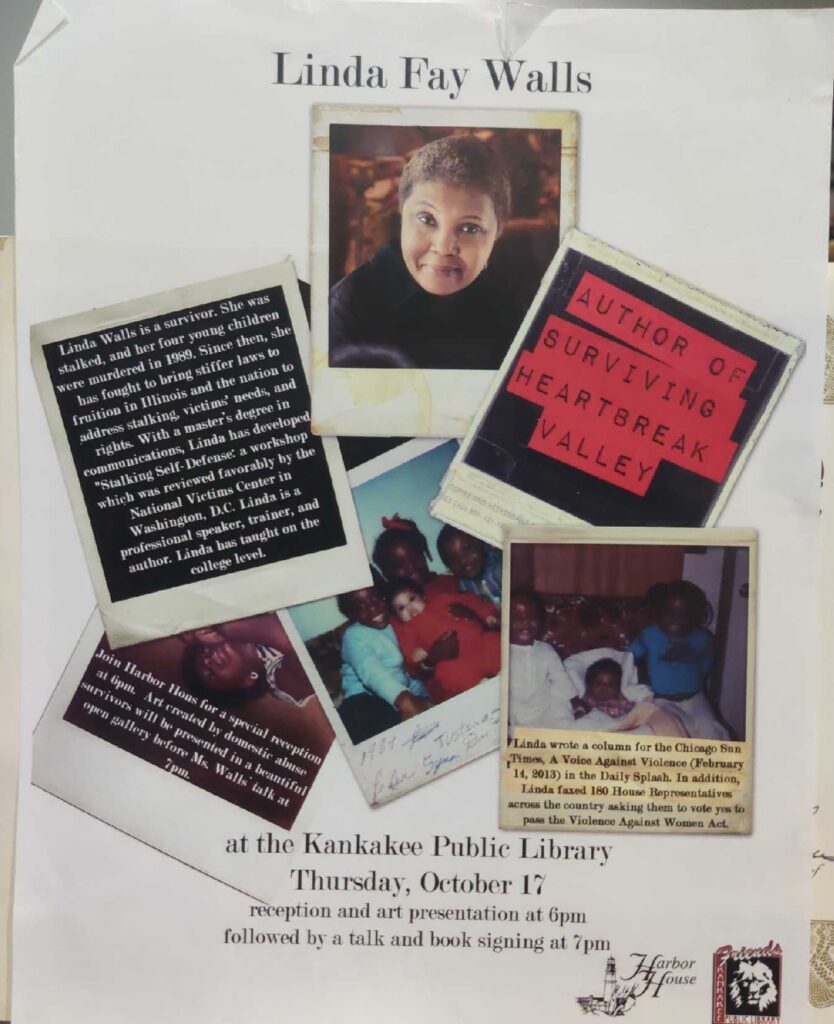
Kankakee Public Library — Featured Speaker & Book Signing
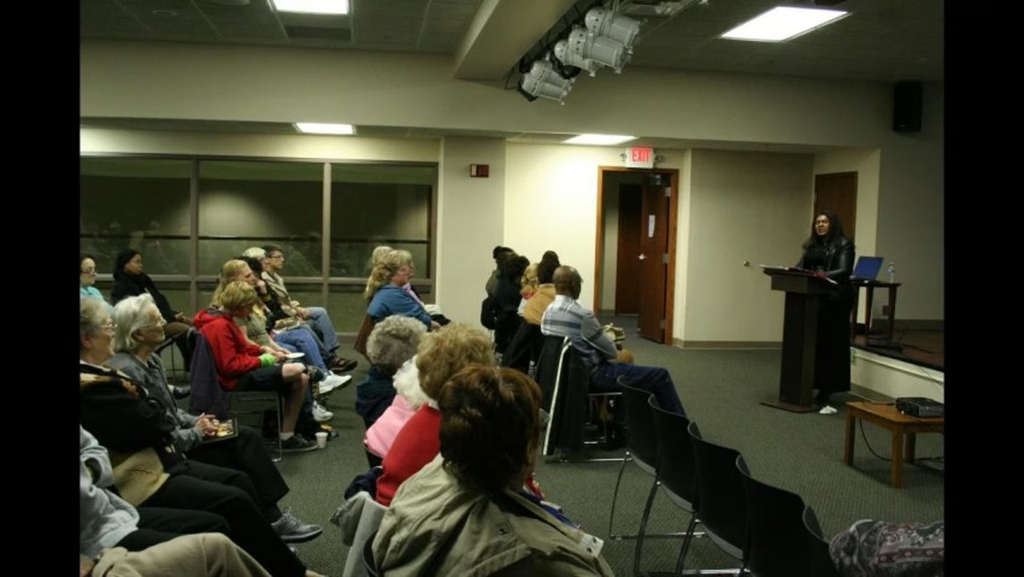
Linda Walls served as the featured speaker for a community event hosted by Harbor House and the Kankakee Public Library. She delivered a presentation on survivor advocacy, resilience, and the ongoing need for stronger protections for victims of stalking and domestic violence.
Following the talk, Linda held a book signing, with all profits benefiting Harbor House. Harbor House purchased copies of Surviving Heartbreak Valley at Linda’s author cost and sold them to attendees at full price, ensuring that all proceeds supported their mission of helping survivors.
Linda’s presentation was recorded and published by the Kankakee Public Library, where it has been listened to over 1,000 times, reflecting the continued relevance and impact of her message.
Following the talk, Linda held a book signing, with all profits benefiting Harbor House. Harbor House purchased copies of Surviving Heartbreak Valley at Linda’s author cost and sold them to attendees at full price, ensuring that all proceeds supported their mission of helping survivors.
Linda’s presentation was recorded and published by the Kankakee Public Library, where it has been listened to over 1,000 times, reflecting the continued relevance and impact of her message.
Reception at 6 PM
Keynote talk and book signing at 7 PM
National Publications
National Coalition Against Domestic Violence — Voice Magazine (Winter 1994)
“STALKED.” — Article by Linda Walls
Published in the Winter 1994 issue of the National Coalition Against Domestic Violence (NCADV) Voice magazine, Linda Walls’ article “STALKED.” examined the growing national crisis of stalking and the urgent need for stronger legal protections for victims. This early publication reflects Linda’s longstanding advocacy for survivor safety and her role in shaping national conversations around domestic violence and stalking.
The original article scan will be added once located.
2002–Present: Historical Record & The Intentional Resilience Blueprint
• 2002: Legal landscape context (Jenner & Block Pro Bono Report).
• Present: Podcast (“Break Through The Noise”) and upcoming book (“Daily Roadmap for Growth”).
Community Education & Virtual Events
Healing Hearts Domestic Violence Awareness Tele‑Summit (October 12, 2012)
The Healing Hearts Domestic Violence Awareness Tele‑Summit, held on October 12, 2012, was a virtual event presented by The Healing Hearts Mission in recognition of National Domestic Violence Awareness Month. The summit used a digital platform to educate the public, share survivor experiences, and provide healing strategies for individuals affected by intimate partner violence. Although the original event link is no longer active, archived information confirms that the Tele‑Summit focused on raising awareness, promoting safety planning, and offering trauma‑informed guidance to survivors.
Note: The original event link is no longer available.
Schaumburg High School — Teen Advocacy Presentation (March 26, 2014)
On March 26, 2014, Linda Walls spoke at Schaumburg High School, fulfilling one of her core missions: educating and empowering teenagers to understand and confront the social issues that impact the well‑being of women and society. Linda discussed stalking, objectification, and violence against women, providing students with insight into recognizing harmful behaviors and advocating for personal and community safety.
Student Reflections & Thank‑You Messages
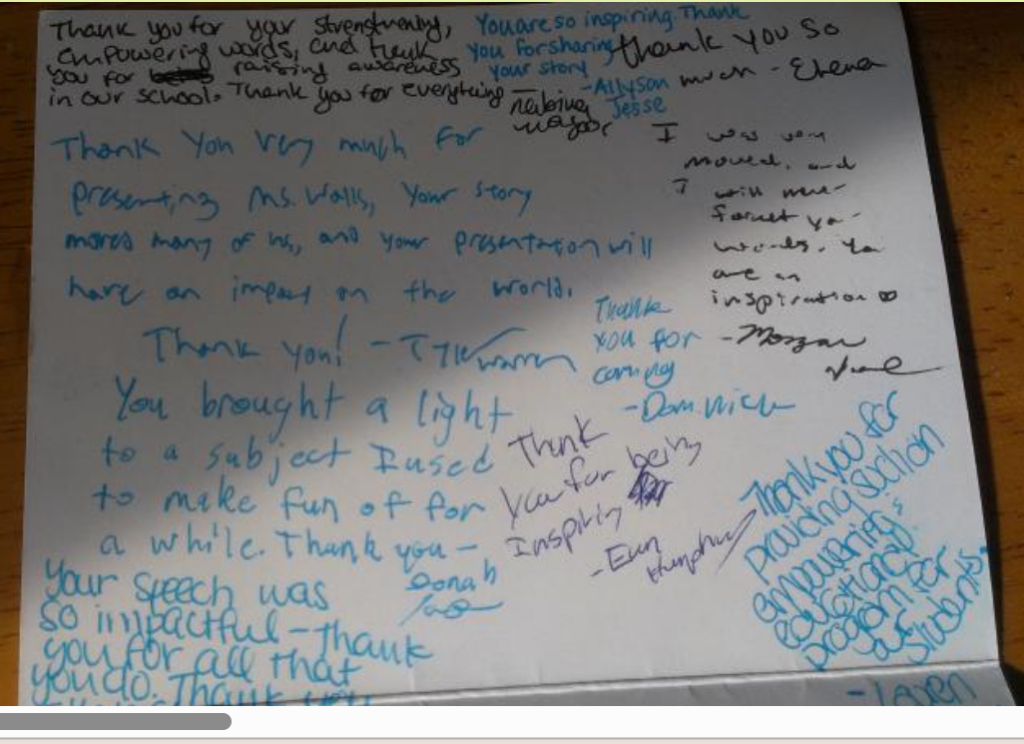
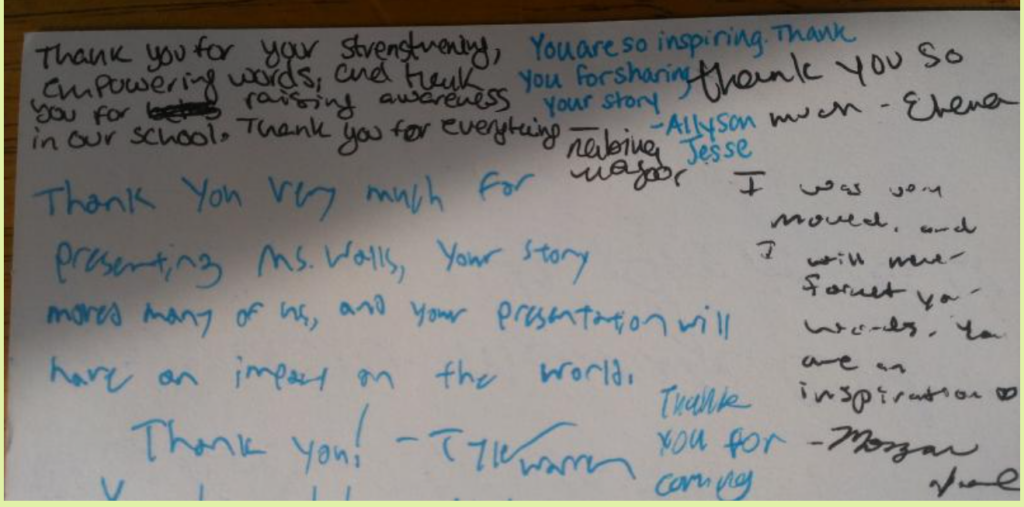
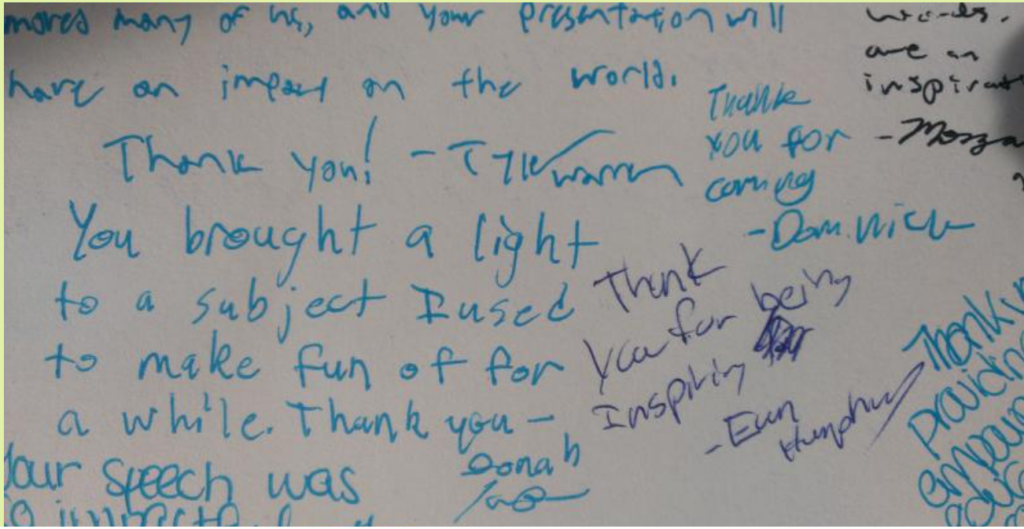
Following the presentation, students wrote personal thank‑you notes expressing what they learned and how Linda’s message impacted them. Their words highlight the importance of youth education in violence prevention and awareness.
Examples from the student messages include:
- “Thank you so much for your informative and creative presentation. We hope that your message continues to resonate with others as it did with us. Thanks!”
- “Thank you for your strengthening, empowering words, and thank you for raising awareness in our school.”
- “Your story moved many of us, and your presentation will have an impact on the world.”
- “You brought light to a subject that I used to make fun of for a while. Thank you.”
- “Your speech was so impactful. Thank you for all that you do.”
- “You are so inspiring. Thank you for sharing your story.”
2013: NATIONAL DIGITAL ADVOCACY & FEDERAL‑LEVEL PUBLIC ACTION
CHANGE.ORG — NATIONAL PETITION FOR DOMESTIC‑VIOLENCE REFORM (2013)
Coverage Type: National Digital Advocacy / Public Petition Platform: Change.org Initiative:
Federal‑Level Domestic‑Violence Reform
In 2013, Linda Walls launched a national Change.org petition calling for federal legislation requiring mandatory mental‑health evaluations in domestic‑abuse cases. Drawing from her lived experience as a survivor of stalking and the 1989 arson that killed her four children, Linda used digital advocacy to mobilize public support and elevate awareness of systemic gaps in victim protection.
The petition emphasized:
- The need for early identification of dangerous offenders
- The role of mental‑health assessments in preventing escalating violence
- The importance of survivor‑centered public‑safety reform
- The urgency of strengthening protections for families at risk
- The national relevance of domestic‑violence prevention
This digital initiative marked Linda’s expansion into national‑level advocacy, leveraging online platforms to engage citizens, influence public dialogue, and support long‑term legislative reform efforts.
MEDIA ARTIFACT: Change.org petition archive record
Faith‑Based Advocacy & Community Partnerships
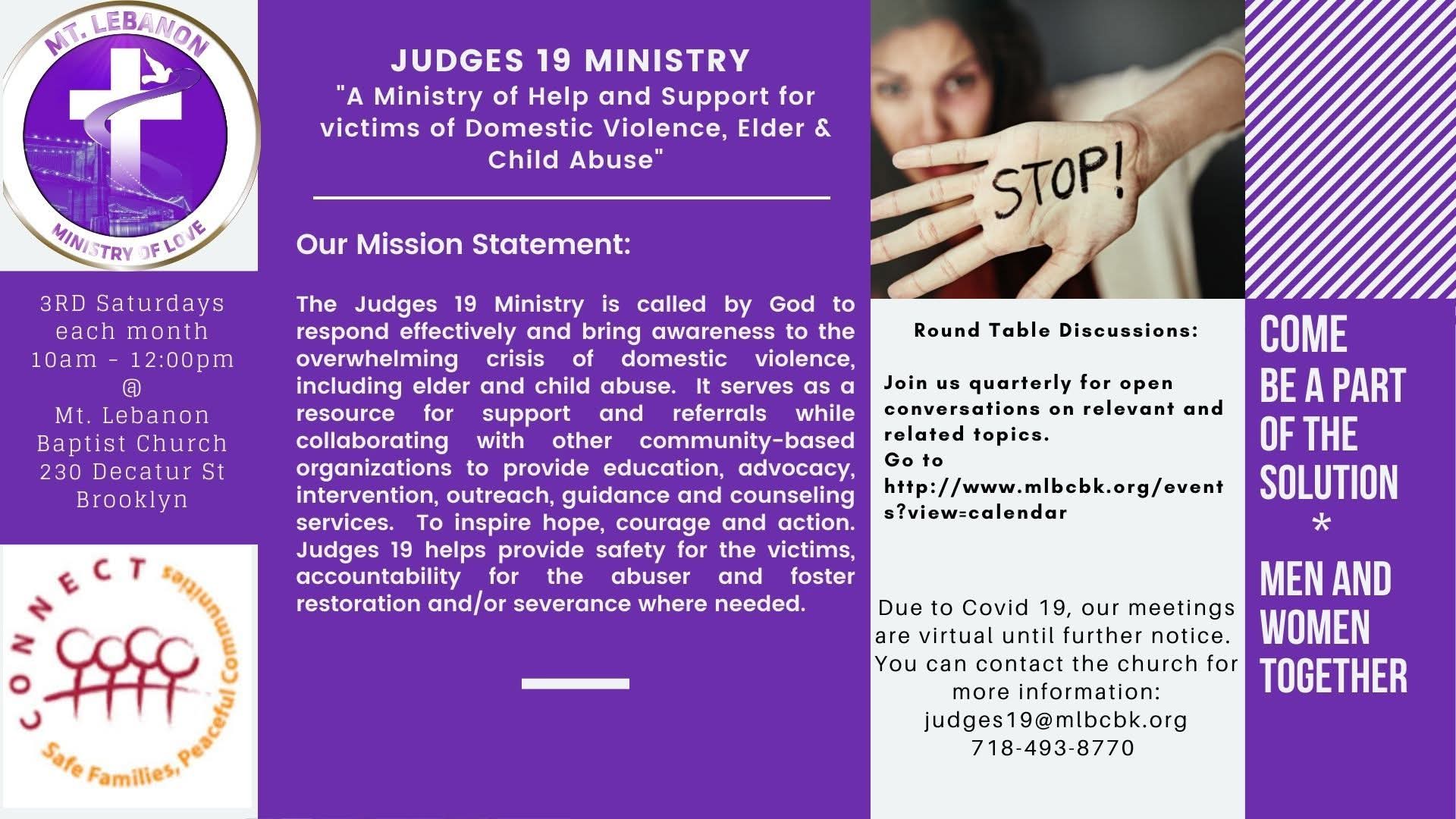
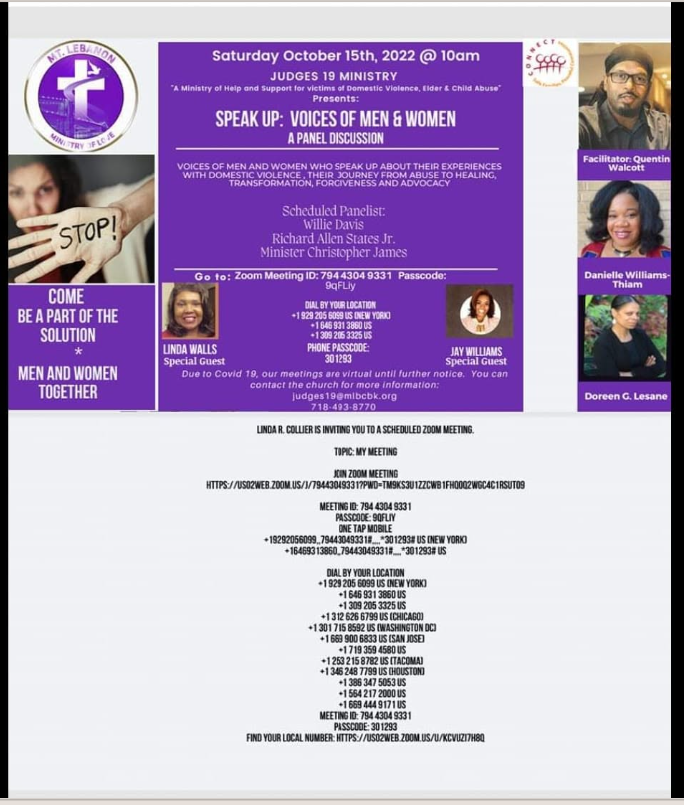
Mt. Lebanon Baptist Church — Judges 19 Ministry
Linda Walls was an invited contributor to the Judges 19 Ministry at Mt. Lebanon Baptist Church, a faith‑based initiative dedicated to supporting victims of domestic violence, elder abuse, and child abuse. The ministry provides education, advocacy, intervention, and community outreach, offering a safe space for individuals seeking healing and support. Linda’s participation reflects her commitment to collaborating with diverse community organizations to raise awareness and inspire action.
Speak Up: Voices of Men & Women — Online Panel Discussion (October 15, 2022)
Linda served as a special guest speaker for the Judges 19 Ministry’s virtual panel, Speak Up: Voices of Men & Women. This event brought together men and women to share their experiences with domestic violence, healing, transformation, forgiveness, and advocacy. Linda contributed her survivor perspective and her expertise in resilience, offering guidance and encouragement to participants navigating their own journeys.
Podcast: Break Through The Noise
A narrative-driven podcast exploring resilience, leadership, and the intentional choices that shape personal growth. Host Linda Walls shares practical frameworks, research, and real conversations to help you move through challenge with clarity and direction.
Upcoming Book: Daily Roadmap for Growth
Daily Roadmap for Growth: Building Your Own Plan for Success provides practical tools and daily habits to help readers build resilience and navigate personal change.
Contact Information
Website: lindawalls.com
Location: Matteson, Illinois
Speaking Inquiries: lindawalls4@gmail.com
Media Requests: lindawalls4@gmail.com